
AI-generated art has moved from a niche experiment to a mainstream creative practice. By 2026, AI drawing tools are used by hobbyists, designers, marketers, educators, and independent artists across the world. What once required technical expertise now feels increasingly accessible, while the cultural, legal, and ethical questions surrounding AI art have grown more complex. Understanding the current state of AI art means looking beyond novelty and focusing on how the tools work, how creators actually use them, and why debate around authorship and originality continues to intensify.
How AI art reached maturity
Early AI art tools focused primarily on surprise and spectacle. Results were impressive but unpredictable, and users often had little control over composition, consistency, or style. By 2026, most leading systems have matured in three key ways.
First, controllability has improved. Users can guide composition, lighting, perspective, and character continuity with far more precision. Second, integration has expanded. AI art tools now connect seamlessly with design software, animation pipelines, and content management systems. Third, reliability has increased. Outputs are more stable, less distorted, and better suited for professional use.
This shift has changed public perception. AI art is no longer seen only as a curiosity, but as a legitimate part of digital creativity.
Core AI art tools in 2026
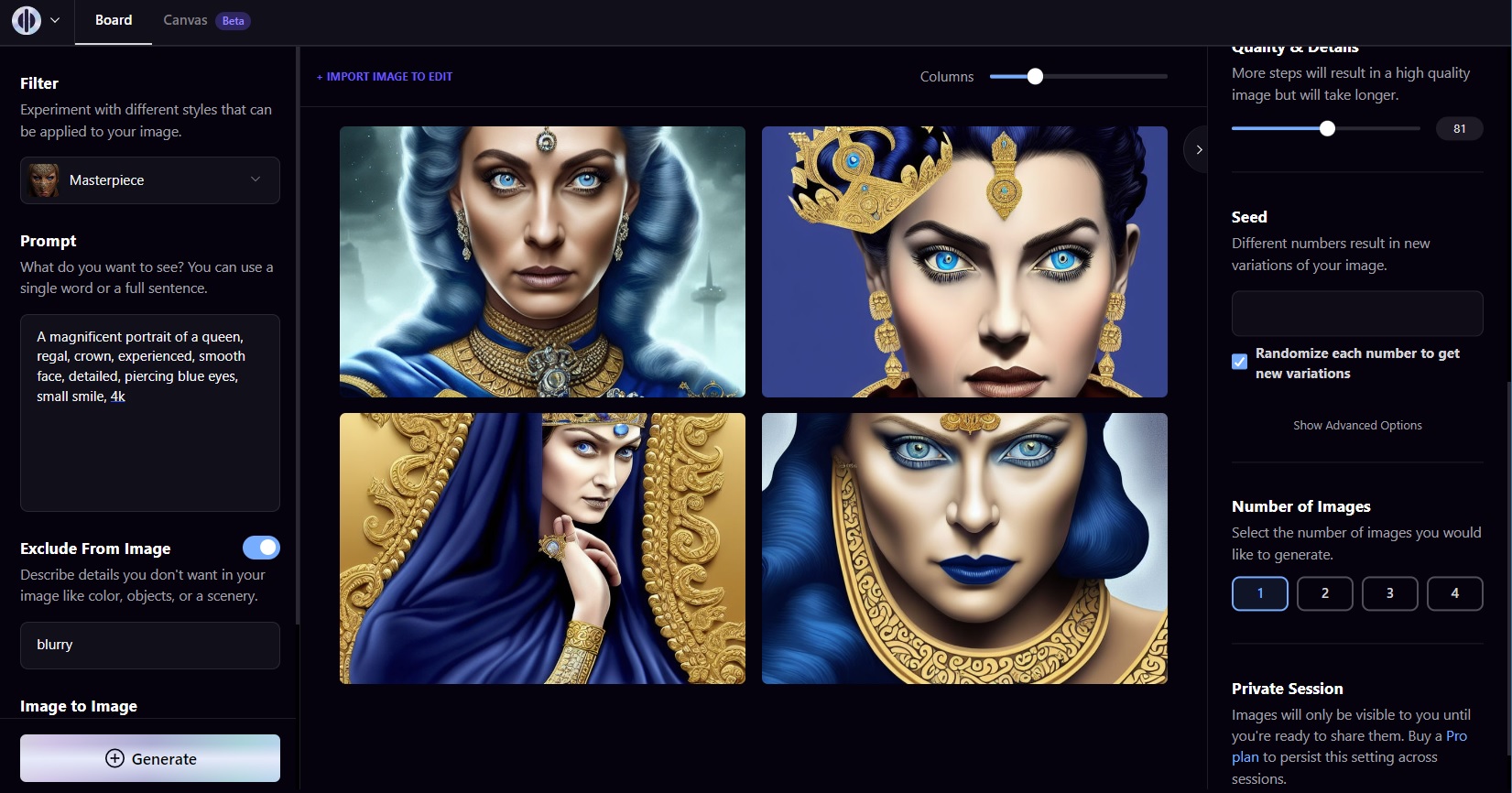


The AI art ecosystem in 2026 is diverse, but most tools fall into a few broad categories.
Text-to-image generators
Text-to-image systems remain the foundation of AI art. Users describe a scene, style, or mood in natural language, and the model generates an image that matches the prompt. These tools are widely used for concept art, illustration, social media visuals, and ideation.
Key characteristics include:
- Support for long, detailed prompts
- Style control through presets or references
- High-resolution outputs suitable for print and web
Image-to-image and editing tools
Image-to-image tools allow users to transform existing visuals rather than start from scratch. Artists can upload sketches, photographs, or drafts and refine them using AI.
Common uses include:
- Enhancing rough drawings
- Re-styling images while preserving structure
- Removing or adding elements non-destructively
These tools blur the line between traditional digital editing and generative creation.
Model customization and fine-tuning
By 2026, many platforms allow creators to train or fine-tune models on specific styles, characters, or visual themes. This capability has been crucial for professional adoption.
Benefits include:
- Consistent visual identity across projects
- Reduced randomness in outputs
- Better alignment with brand or artistic vision
Customization has also encouraged more responsible use, as creators can work with datasets they own or license.
Who is using AI art and why
AI art adoption has broadened significantly, reaching audiences with very different goals.
Independent artists and illustrators
Many artists use AI as a creative assistant rather than a replacement. It helps explore ideas quickly, test compositions, or overcome creative blocks. Finished works often combine AI-generated elements with manual refinement.
Designers and marketers
For commercial users, speed and scalability matter most. AI art supports rapid prototyping, ad creatives, thumbnails, and visual variations for campaigns. The ability to generate multiple concepts in minutes has reshaped visual marketing workflows.
Educators and learners
AI drawing tools are increasingly used in education to teach visual concepts, art history, and design principles. Students can experiment with styles and techniques that would otherwise require years of practice.
Casual creators
A large portion of users simply enjoy creating images for personal expression or entertainment. Social platforms continue to amplify AI art trends, keeping the space culturally relevant.
Major trends shaping AI art in 2026
Several trends define how AI art is evolving beyond basic image generation.
Hybrid human–AI workflows
The most respected AI-assisted works rarely rely on a single prompt. Instead, creators iterate, edit, and curate outputs across multiple steps. AI handles variation and speed, while humans provide judgment, narrative, and intent.
Style realism and restraint
After years of exaggerated, hyper-detailed aesthetics, many creators now favor subtler, more realistic visuals. AI art increasingly mimics traditional media, documentary photography, and understated illustration.
Multimodal creativity
AI art is no longer isolated. It connects with text, audio, video, and 3D generation. Visuals generated by AI are animated, narrated, or embedded into interactive experiences, expanding their expressive range.
Ethical dataset awareness
Users are more conscious of how models are trained. Tools that emphasize transparency, opt-in datasets, or licensed material tend to gain trust faster than opaque alternatives.
The ongoing controversies
Despite technical progress, AI art remains controversial. The debates in 2026 are more nuanced than earlier arguments, but no less intense.
Authorship and originality
A central question persists: who is the artist when an image is generated by a model trained on millions of existing works? Some argue that creativity lies in prompting, selection, and refinement. Others see AI art as fundamentally derivative.
There is no universal answer, and opinions vary by community and legal system.
Copyright and ownership
Laws have struggled to keep pace with technology. In many regions, AI-generated images exist in a gray area where copyright protection is limited or unclear. This uncertainty affects commercial use, licensing, and enforcement.
Creators must often rely on platform terms rather than clear legal precedent.
Impact on creative labor
Concerns about job displacement remain valid, especially in fields like illustration and stock imagery. At the same time, new roles have emerged, including prompt designers, AI art directors, and hybrid creators.
The long-term impact on creative labor is still unfolding.
Cultural and social risks
AI art can replicate biases present in training data, reinforcing stereotypes or excluding certain perspectives. Responsible tool design and informed user behavior are essential to mitigate these risks.
Practical considerations for creators
For anyone interested in AI drawing in 2026, a few practical principles stand out.
- Learn prompting as a craft, not a shortcut
- Combine AI outputs with human editing
- Understand the licensing terms of your tools
- Be transparent about AI use when appropriate
- Focus on storytelling and intent, not just visuals
These habits help ensure that AI art remains meaningful rather than disposable.
Where AI art is heading next
Rather than ending with a simple conclusion, it is more useful to think of AI art as an ongoing negotiation between technology and culture. The tools will continue to improve, becoming faster, cheaper, and more precise. What will matter most is how creators choose to use them.
In 2026, AI art is no longer defined by shock value. It is defined by choices: how much control to give the machine, how much responsibility to take as a human, and how to create images that resonate beyond their technical origins. The future of AI art will not be decided by algorithms alone, but by the values and intentions of the people who guide them.
